
Thailand Mental Health Dialogue: From Shared Challenges to Shared Action
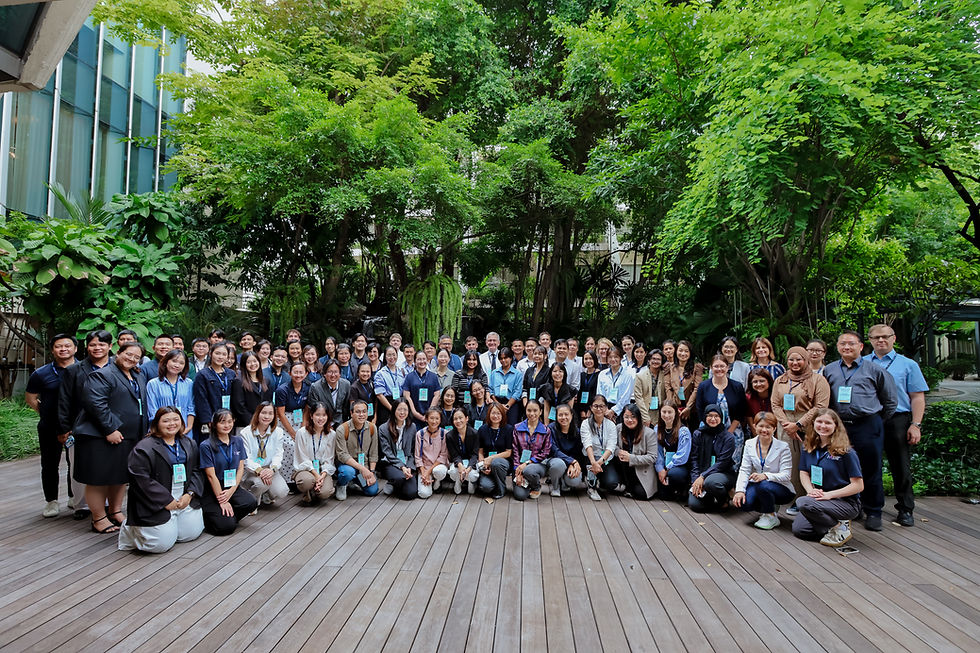
On 17 September 2026, MORU convened the Thailand Mental Health Dialogue: From Shared Challenges to Shared Action at VIE Hotel Bangkok, bringing together stakeholders from government, international organisations, academia, research, healthcare and other sectors.
The Dialogue was designed as a co-creation meeting: to build a shared understanding of Thailand’s mental health landscape, identify important gaps and unmet needs, and explore where organisations could work together. The discussions will also help inform the development of the MORU Mental Health Strategy, particularly around research, innovation, data and implementation.
From Landscape to Gaps
The meeting began with perspectives from the Department of Mental Health, UNICEF and WHO on current priorities, policy directions and emerging challenges.
Participants then mapped existing initiatives and areas of expertise across organisations, alongside MORU’s work in research, innovation and implementation. The programme was deliberately structured to move from understanding the landscape → mapping existing action → identifying gaps → co-creating priorities and next steps.
In the afternoon, discussions shifted towards unmet needs and future priorities.
One breakout group focused on people, communities and services, looking across the pathway from demand → access → care and considering prevention, early identification, primary and community-based care, referral and continuity of care.
Several themes emerged from this discussion.
Earlier identification is needed. Current detection can depend heavily on people presenting to health services, potentially missing those who are harder to reach. Participants discussed opportunities for more systematic screening through schools, antenatal care, primary care and community settings.
Existing tools need better coordination and local adaptation. Many mental health screening and assessment tools already exist, but there is limited clarity around which are most appropriate for screening, diagnosis, research or follow-up. Participants also highlighted the need to balance international standardisation with culturally and linguistically appropriate tools.
Access must connect to care. Screening alone is insufficient if referral and follow-up pathways remain weak. Community-based approaches may help bring support closer to people, but their feasibility, uptake, effectiveness and cost-effectiveness need to be tested in Thailand and Southeast Asia.
From Gaps to Collaboration
The final sessions asked a forward-looking question: what should we work on together?
Participants moved into co-creation and prioritisation, exploring areas where organisations could contribute complementary expertise and where research could help address shared needs.
A recurring message was that the challenge is not always a lack of ideas. It is often about connecting existing tools, evidence, services and expertise into approaches that can work in real-world systems.
The Thailand Mental Health Dialogue was therefore a starting point: creating a shared space to identify where research and innovation can add value, where implementation evidence is still needed, and where organisations can collaborate rather than work in parallel.
The next step is to translate these shared priorities into focused collaborations, practical research questions and pathways towards better mental health support and care.


Comments